
By Aegean Publishing · 5 min read
Full-book review based on the complete English review copy supplied by the author for private editorial assessment in November 2026. This is an independent response to the book, not a paid placement or an author interview.
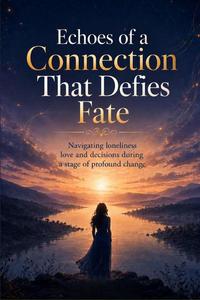
Book under review
Echoes of a Connection That Defies Fate
Vilma Duschak · 2026
Published English-edition cover, reproduced with the author’s permission. Source: the author’s official Books2Read page.
What remains when a familiar life changes?
The central question in Vilma Duschak’s Echoes of a Connection That Defies Fate is not whether a woman can fall in love again after sixty. It is whether she can remain open to affection without allowing someone else’s uncertainty to determine the shape of her days. Bereavement, separation and changing family relationships have unsettled the life of an unnamed protagonist. What follows is less a conventional romance than a long examination of what companionship, dignity and self-direction might mean in its aftermath.
At first, her apartment seems to hold more memories than possibilities. Family photographs and ordinary objects register the absence of people once close at hand. Some of her children live abroad; she can take pride in their independence while mourning the missed birthdays, visits and everyday familiarity that distance makes impossible. That contradiction is one of the book’s most persuasive observations. It does not treat the love of a parent as cancelled by the freedom of an adult child, or the pain of separation as evidence of selfishness.
The kindness of an ordinary visit
Among the quieter but more effective passages are those involving Rosa, a neighbour who offers tea and attentive company. Rosa does not arrive to solve a crisis. Her significance lies in the modesty of the gesture: a person is present, willing to listen, and the protagonist is momentarily less alone. Here the book finds an emotional clarity that its more abstract reflections sometimes struggle to achieve.
The pandemic changes the scale of such encounters. Phone calls carry emotional weight when physical closeness becomes uncertain. Duschak is interested in how a voice, a pause or a conversation that continues past its practical purpose can make someone feel noticed. This is a strong premise for the story’s wider exploration of intimacy at a distance. Yet the same experience raises an important question: how much of the meaning belongs to what the other person does, and how much to what the protagonist hopes those gestures mean?
When feeling and certainty pull apart
The protagonist’s attachment to her therapist brings that question into sharper focus. The professional relationship offers a space in which she can speak honestly about loss, vulnerability and the need for independence. The emotional intensity that develops around it is also the book’s most complicated subject. Professional boundaries, the difference between empathy and romantic reciprocity, and the possibility of mistaking an interpretation for a promise all matter here.
At its most interesting, the narrative leaves us close to a woman trying to understand feelings that do not obey convenient rules. At other moments, the prose moves too quickly from describing her experience to asserting what the bond means for both people. The reader is not always given enough enacted dialogue or independent evidence to share that certainty. More room for ambiguity would not diminish the protagonist’s emotion; it could make the emotional stakes more convincing.
A reflective novel rather than a plot-driven one
Duschak combines fictional episodes with sustained meditation on patience, self-respect, loneliness and personal responsibility. The result reads at times like a reflective essay carried by a character’s life. Readers looking for fast-moving scenes, sustained dramatic conflict or a conventional romantic resolution may find the pace unusually still. Those interested in later-life interiority and the language people use to make sense of emotional change may be more receptive to it.
The reflective form has costs. Images of rivers, thresholds and inner compasses return repeatedly; the conclusions about vulnerability and autonomy often reappear before the situation has changed enough to give them new force. Some chapters explain what a moment teaches before allowing that moment to unfold. Further attention to distinctive voices, concrete dialogue and chronological transitions would strengthen the fiction without sacrificing its contemplative purpose.
Still, the decision to place an older woman’s emotional needs at the centre deserves recognition. The protagonist is not asked to choose between being a mother, being independent and wanting to be loved. The book understands that these desires can coexist, even when their practical expression is difficult.
What the ending leaves with us
The book resists the neat closure implied by many romance narratives. Its lasting concern is wider than the future of one relationship: can someone learn to value affection without organising life around waiting for another person’s decision? In the strongest parts of Echoes of a Connection That Defies Fate, the answer begins in ordinary gestures, friendships and renewed attention to the present, rather than a dramatic declaration.
This is an uneven but sincere and worthwhile exploration of loneliness, love and renewal in later life. Its most resonant insight is that hope for connection need not require the surrender of independence. The writing would gain from greater compression and more vividly realised scenes, but its central subject—an older woman’s right to emotional complexity—remains both timely and underrepresented.
Full text and sources
Editorial note: The author supplied the complete English review copy. No paid placement or affiliate relationship. Editorial responsibility: Aegean Publishing.